

You can use a couple of methods to help you determine whether or not your Damascus knife is fake. And Yimikia Damascus knife is legitimate.
1. Check the nooks and crannies
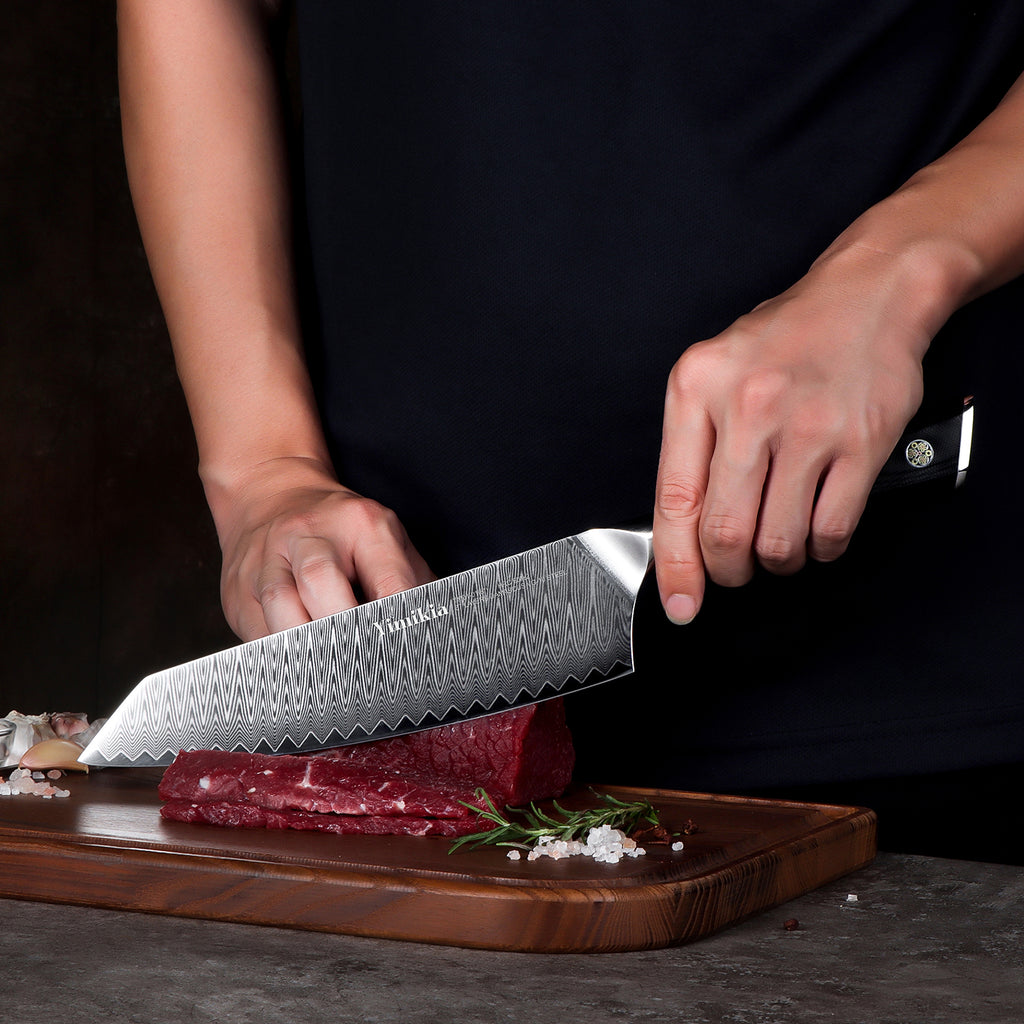
For a real pattern-welded steel Damascus blade, the waves will be noticeable on each surface of the blade; this includes the flipper tab, spine, and other parts of the blade. The unfinished parts of the knife will still show the waves and evidence of the pattern-welding process. This can be tricky, though. Some legitimate Damascus blades don’t have the waving pattern on the spine or cutting edge of the blade because of the way the folds work out in the pattern-welding process.
2. Look at the pattern
Real Damascus will have continual patterns. Printed or etched patterns may not line up correctly because of the spine of the knife. If the pattern doesn’t seem cohesive, it could be a sign that the Damascus is a fake.
3. Rub the blade
Some people adding printed patterns to blades do it cheaply enough that you can rub the offending ink off the blade. However, occasionally, black residue comes off an actual Damascus blade. This residue is from the acid etching process and is not ink, which can be confusing.
4. How do we determine for sure?
If you have gone through the other methods and still aren’t sure about your blade or just want to know for absolute certain, there is one more test you can run on your knife to find out if it is a legitimate pattern-welded steel Damascus blade. This testing takes a few steps:
- Remove the polish. You can do this with sandpaper on the blade. Rub until it has that satin look.
- Apply acid. Once the blade is nice and polished, etch it with muriatic acid or ferric chloride.
If the pattern returns after acid etching the blade, you have a real Damascus. If the pattern is gone after this process, it’s a fake.