

While a salt mill might feel like a minor part of your kitchen arsenal, investing into the right one is crucial as it’s an everyday essential and goes a long way in revamping your dishes. Moreover, it’s important to remember that different salt mills are designed to cater to different needs of its customers. So Yimikia recommend that you read up on the following factors and take an educated buying decision, rather than going for a random product off the shelf.
Adjustment Settings
Some salt mills facilitate variety of coarseness/fineness outputs through its adjustment settings and some don’t. If you’re a perfectionist and like your spices to be ground to precision this is definitely something that deserves consideration. While buying, make sure the grinder comes with clear markings and indicators so that it’s easy to comprehend whether you should take it up/down a notch while cooking.
Storage Capacity
For customers who use salt mills on a regular basis or with bulk amounts, storage capacity is one of the prime factors for consideration. A large storage capacity ultimately translates to less refills and hassle. But it’s also worth remembering that salts and spices tend to lose their vigor with time. So a moderately large/medium sized container would be ideal for most purposes.
Convenience
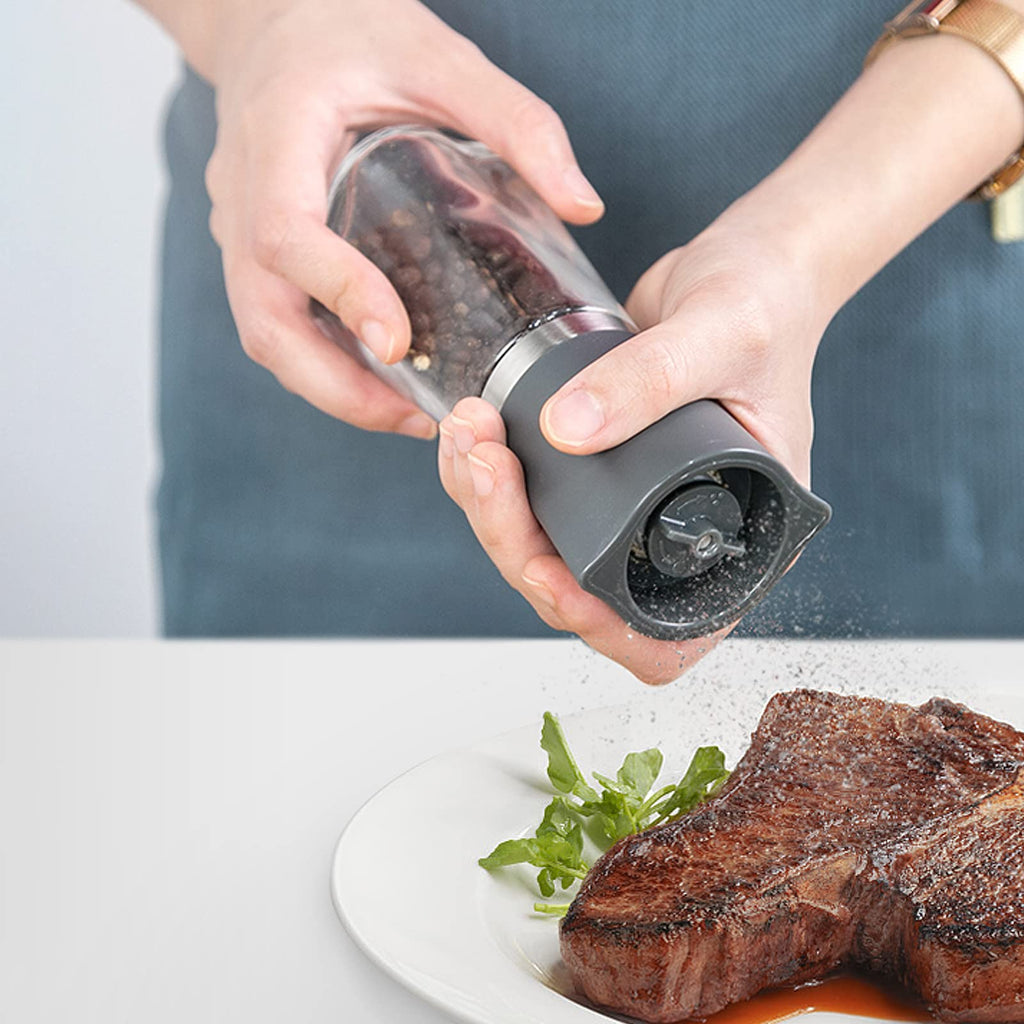
Some grinders require considerable amount of effort for rendering the desired output, whereas others offer a smooth experience through accelerating ease of use. In extreme scenarios of the former, customers (especially aged people) are seen to struggle with intense wrist pain. Before buying the salt mill, make sure the grinder is easy to crank/twist and consistent.
Grinding Mechanism
Considering the grinding mechanism to be something very tech-y and intricate, most customers don’t bother to check into it. What they don’t consider is the fact that the grinding mechanism is the ultimate determiner of the durability and functionality of the product. One surefire way of telling apart good grinding mechanisms from inferior ones is checking their material. Stainless steel and ceramic mechanisms ensure maximum bang for the buck whereas acrylic ones simply fail to deliver in most cases.